hay kwthu stqeeye’ mustimuhw | The End Of The Wolf Men
This is a story was written from stqeeye’paal’t-hw | Lawrence George and pul-qwuletse’ | Wayne Charlie for our new stories project in February 2026. It is based on a story in English from a newpaper article in the October 7th, 1929 Cowichan Leader. Cryoss was the author of the story but he does not identify exactly who he heard the story from. Thanks to Wayne Charlie for the Hul’q’umi’num’ recording.
hay kwthu stqeeye’ mustimuhw | The End Of The Wolf Men
- ni’ ’u ch ’uw’ statul’stuhw ’uw’ nutsim’us shus ’uwu’ te’ stul’qeeye’ ni’ ’utl’ hwmet’utsum?
Do you know why there are no wolves on hwmet’utsum? - kwun’a wulh hithulh ’i’ niilh ’uw’ ni’ kwthu t’atulh s’ul’eluhw tst nelu ’uw’ ni’ ’utl’ hwmet’utsum.
A long time ago, our people lived on Salt Spring Island. - niilh ’uw’ tsakw kws ’i’mushs ’eelhtun kws yu ’a’luxutus kwthu qa’ ni’ ’u kwthu xatsa’.
But they had to go (walk) far to get their water (at or near the lake?) - nilh ’uw’ nuts’a’ shni’s kws yu ’a’luxut-s tthu qa’ ’uw’ stutes ’i’ nilh thulh ’uw’ tsakw.
There was only one spring near them but it was far.? (ask why ’a’luxut-s is in there if it is to collect, gather or hunt?) - kwthey’ xatsa’ yathulh ’uw’ hwii’yulasmustum ’u kwthu stul’qeeye’, mu.u.ukw’ skweyul, mu.u.ukw’ snet ’i’ ni’ hwii’yulasmustum ’u kwthey’ xatsa’.
This lake was (always?) guarded day and night by wolves. - nanulh ’uw’ xisul’ ’u kwthey’ stul’qeeye’, kw’am’kw’um’ tthu stul’qeeye’.
They were very fierce, strong wolves. - ya.a.athulh ’uw’ skwukweel’ kwthu stul’qeeye’ shishuts’ ni’ ’u kwthu thul’i’thqut ’al’mutstum’ ’uw’ ni’us ni’ kwthu ni’ hunum’ ’u kwthey’ xatsa’.
They would always hide in the bushes, waiting on those going to the lake. - ’uw’ niis ni’ kw’u ni’ t’ut’a’thut yu hunum’ ’u kwthey’ xatsa’ tuw’ qa’qa’t ’u kwthu qa’ ’u kwthey’ shqa’qa’elu.
Anyone who was brave enough to try to go there and drink water from the spring. - nu.u.uts’a’ skweyul tthu s’ul’eluhw niihw q’puthut yu naanum’ ’eelhtun xetstus ’uw’ tstamutus.
One day the elders gathered together, talking, planning what to do. - ha ’i’ niihw sxatsthut-s ’eelhtun yelh yu nanum’ yelh ’uw’ kwu’elh lhu mun’us kwthu hiw’a’qw, slheni’ mun’us ’u tthu hiw’a’qw.
At last they made a plan, their plan was to take the daughter of their chief. - ’uw’ tl’uqtemutth’ p’e’ kw’am’kw’um’ stsuw’et, na.a.n ’uw’ ’i’uy’mut q’e’mi’, mukw’ lhwet ’i’ ’uw’ yu tl’i’t.
She was a tall, strong, smart and very beautiful young lady, so everybody loved her. - sis ’uw’ niihw ’uw’ yu thuytus ’eelhtun sluwi’ s’itth’um’ ni’ tse’ yu ha’kwushus— tl’lim’ ’uw’ ’i’uy’mut lhu si’em’.
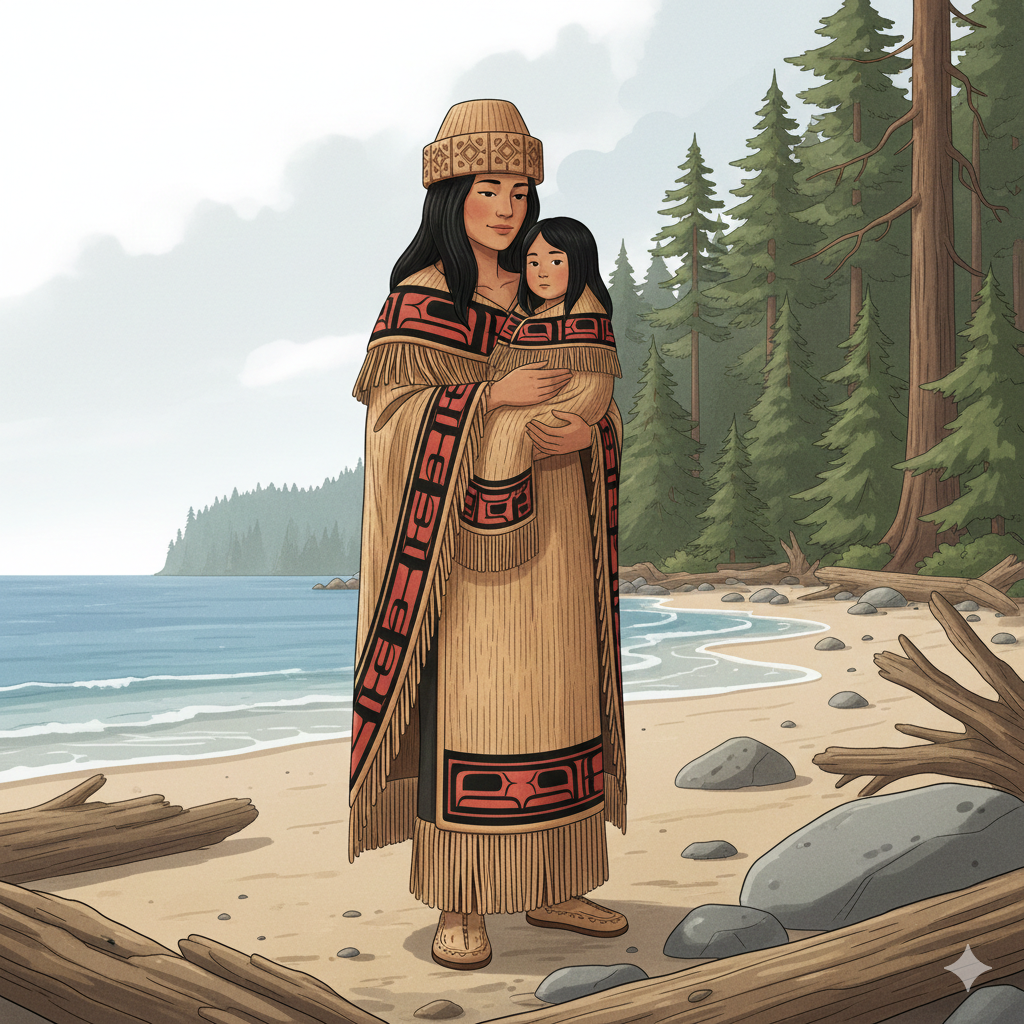
So they made her a dress from cedar bark and dressed her in it—the respected lady was very beautiful. - sis ’uw’ yu q’ep’utum’ sp’eq’um’ t’uyum’shus ’u kwthu she’ituns ’i’ namustum ’u kwthey’ shqa’qa’elu.
And then they tied some flowers in her hair and sent her to the spring. - niilh ’uw’ hwqwul’qwul’iwun’, ’uw’ ni’us yu ’amustum kwthu stul’qeeye’ thu hay ’ul’ ’i’uy’mut q’e’mi’ ’i’ xwum ’i’ hwtelqutalum kwus ’aanlh kwus qa’qa’ ’u kwthey’ shqa’qa’elu.
They thought that if they gave the fairest maiden to the wolves, surely they will give us permission to drink the water. - nilh ’uw’ mun’us kwthu hiw’a’qw yu titum’utus kwthu shqwaluwuns ’i’ nem’ kw’ikw’unuq [kw’ikw’uqun’] tthu shni’s ’u kwthu shqa’qa’elu.
The chief’s daughter bravely set out climbing up to the spring. - kwus yu ’i’mush thu q’e’mi’ ’i’ niw’ hwiyuneem’utus tthu stul’qeeye’ tsukwul’ul’qum’ ’i’ nanum ’eelhtun kwus yu tsukwul’etus lhu slheni’.
All around her she could hear the wolves walking with her as they followed her trail. - ’uwu’ niis yu lumnuhwus kwthu stul’qeeye’ ’uw’ hay ’ul’ kwus yu hwu stutes ’u kwthu shqa’qa’elu.
There was no sign of them until she came to the place of the spring, - ’i’ nilh thulh wil’ nilh yuhw tthu si’em’s tthu stul’qeeye’ ni’ tstl’um’ ni’ ’u kwthu shelhs ’u lhu q’e’mi’ kwus yu hunum’ ’u tthu shqa’qa’elu.
Then suddenly a great wolf sprang right in the young lady’s path. - sis ’uw’ kwuyxthut tthu stqeeye’ q’ikw’utus thu q’e’mi’ sis ’uw’ yu tsum’etus nem’ kw’i’qun.
Seizing her in his huge jaws, he then carried her away up the mountain. - ni.i.i’ kwu’elh tus ’u kwthu lelum’ ni’ ’u kwthu shelhs kwthu lelum’ m’i wil’ tthu swuy’qe’, s’eluhw swuy’qe’.
Here they arrived at a house, from the door there came out an old, old man. - nilh yuhw kwu’elh mens tthu stul’qeeye’ ni’ yu ’a’lmutsun’.
That was the father of all the wolves waiting. - ni’ kwu’elh we’[wu’]ul’ tthu stul’qeeye’ ’uw’ yu te’lutsul ’u kwthu lelum’.
The wolves were appearing from all sides coming through the house. - ni’ kwu’elh hun’nuw’ ’u kwthu lelum’s kwthu s’eluhw ’i’ ni’ hwi ’i’ya’qthut me’shus tthu stqeeye’ s’itth’um ’i’ hwu hwulmuhw, hwu hwulmuhw mustimuhw.
As they came into the house they transformed and walked as men. - kwus wulh yu lumnuhwus kwthu s’eluhw nilh yuhw mun’us kwthu hiw’a’qw, ni’ kwu’elh yu hilukw’ tthu shqwaluwuns.
When the old man saw the chief’s daughter, he was overjoyed. - “aah, thunu mun’u,” ni’ xut’u.
“Ah, my daughter!” he cried. - “na.a.an ’uw’ hith kwutst yu ’al’mustha’mu.
“We have waited a long time for you. - tthunu swuy’qe’ me’mun’u nilh ’uw’ stl’i’ ’utl’ nuwu.
My sons have always wished for you. - ni’ kwu’elh yu kwunnamu, nuwus tse’ swe’s sta’lus[th] nuwus tse’ hwu sqa’qa’ ’u tthunu mun’u.”
Now that my son has found you, may he take you for his wife and you will live with him.” - ’uwu’ te’ sla’thuts thu q’e’mi’ si.i.is ’uw’ tsukwul’ul’qum’ ’u kwthu swuy’qe stqeeye’ nilh ni’ yu kwunnuhw.
So the young lady went to live with the wolf man who had caught her, - ’uw’ nii.ii.iis swe’s tsekwul’ kws hiths ’i’ ni’ kwus kwan mun’us, swuy’qe’ mun’us.
And in time a little son was born to them. - kwus wulh kwan kwthu mun’u ’i’ tl’lim’ ’uw’ hilukw’ thu q’e’mi’ ’i’ nilhulh ’uw’ xulhuluw’s tthu tth’ele’s shqwaluwuns.
That child brought great happiness to the sad heart of his mother. - ya.a.athulh ’uw’ hwqwul’qwul’i’wun’ he’kw’metus tthu swe’s ts’lhhwulmuhws ’i’ skw’ey kws lumnuhwus kwthu swe’s ts’lhhwulmuhws.
She was always thinking about her people, who she couldn’t see. - ya.a.athulh ’uw’ hwun’ hwii’yulasmut tthu shqa’qa’elu ’uwu te’ lhwet nem’ qa’qa’ ’u tthey’ shqa’qa’elu.
Because the wolves still guarded the spring and wouldn’t let anyone drink there. - mu.u.ukw’ skweyul swuy’qe’ sta’lus yathulh ’uw’ nem’ yu ’um’mush.
Every day, her husband would always go out hunting. - ’i’ yathulh ’uw’ le’lum’ thu q’e’mi’ le’lum’utus kwthu sta’lusth kwus nem’ yu huye’.
The young lady would always watch him go from her sight. - ni’ wa’lu qwaqwul’st-hwus tthu s’eluhw, mens tthu sta’lusth.
And she would be speaking to the old man, her husband’s father. - “nem’ tsun t’hwaalh ’a’luxut kwthu s’axwa’ ni’ ’u tthu tsetsuw’.”
“I am going to dig clams down on the beach.” - si.i.is ’uw’ yu hwutulqun kwthu ’eluhw, “hay lhu nem’ ’a’luxut kwthu s’axwa’.”
The old man would answer, “Go then and gather some clams.” - qwals tthu s’eluhw, “ni’ ch tse’ m’i hun’umut ’uw’ niis wulh kw’i’ tthu qa’.”
The old man said, “But return home when the tide comes in.” - mu.u.ukw’ skweyul ’i’ nilh ’uw’ yu ’i’mush thu q’e’mi’ kwun’atul’ ’u kwthu mim’ne’s ’uw’ ’i’ ’i’mush ni’ ’u kwthu stslhiqun’.
Every day the girl would take her baby and walk through the wilderness. - nilh ’uw’ yu hunum’ ’u kwthu tsetsuw’ ’a’luxutus kwthu s’axwa’.
She went down to the beach to dig some clams. - ’i’ yathulh ’uw’ xeem’ tthu shqwaluwuns he’kw’metus kwthuw’ swe’s ts’lhhwulmuhws.
And she would always cry and cry for her own people. - ’u kwus wulh qumul’ tthu qa’ ’i’ ni’ yu t’at’ukw’st-hwus kwthu s’axwa’ nilh s’ulhtuns kwthu stul’qeeye’ mustimuhw.
When the tide rose, she would take all her clams home to feed all the wolfmen. - tus ’u kwthu nuts’a’ skweyul ’i’ ni’ hwu yu ’i’mush kwthu mun’us.
The time came when her son started to walk. - ni’ kwu’elh qul’et nem’ yu t’ahw hunum’ ’u tthu kw’atl’kwu.
And once again they went to the sea. - nuts’a’ skweyul ’i’ wil’ tthu qwunus ni’ t’it’utsum’ ’uw’ yu stutes kwus yu st’e kw’u yu huy’luw’.
This time they seen a huge whale swimming close to shore. - tsume’tus tthu mun’us ’i’ ni’ xwchenum hwu stutes ’u kwthu qa’, kw’atl’kwu.
Carrying her son, she ran to the waters edge. - sis ’uw’ yu teemutus tthu qwunus, “m’i hun’lheelt!” kwus yu kwetsum.
She yelled out to the whale, “Come ashore!” she yelled out. - sis ’uw’ yu qwalst-hwus kwthu qwunus, “tth’ihwum ch ’i’ m’i ts’ewutham’sh!”
And she told the whale, “Come ashore and save me!” - ni’ kwu’elh hwiyunem’utus thu q’e’mi’ tthu qwunus sis ’uw’ tuw’ yu tasthut
And the whale heard the young lady and he approached. - sis ’uw’ qul’et ’aatus kwthu qwunus kwus tuw’ tasthut.
And she called to the whale again to come closer. - “tth’ihwum ch ’i’ m’i’ qw’imut tthu kw’atl’kwu.”
“Come up out of the water.” - ni’ tuw’ xtsuthut kwus yu t’it’utsum’ kwthu qwunus, sis ’uw’ yu ts’utum’ kwus m’i qw’im ’u kwthu qa’.
Then swimming to the waters edge and crawling slowly, slowly making his way out of the water. - ni’ kwu’elh qw’imut tthu qa’ tthu qwunus ni’ yu ts’utum’ hunum’ ’u thu q’e’mi’, ni’ kwu’elh hwu tsitsulh sqw’iqw’um’ ’u tthu qa’
The great whale made his way towards her until it was high upon the shore. - ni’ kwu’elh ptem’, “stsekwul’ kwu’elh ’i’ ni’ tsun ts’ewuthamu?
He asked, “How can I save you? - yuthustham’sh ’uw’ tuw’ stsekwul’us ’i’ tuw’ yu ts’ewutthamu tsun tse’.”
Tell me what I must do.” - “sheq’um tthun’ thathun,” qwals thu q’e’mi’.
“Open your mouth wide,” said the woman. - sis ’uw’ qwals thu q’e’mi’ “nuw’ush tsun tse’ ’u kwthu sts’esht shhwu’ixwstuhw tthun’ thathun.”
“And I will put a stick in to hold it open.” - qwals thu q’e’mi’, ’un’nehw ch tse’ ’ul’ nem’ tsun ’aat tthu stul’qeeye’.
The young lady says, “Now lay still and I will call the wolves who are keeping me. - ’uw’ ni’us wulh tetsul tthu stul’qeeye’ ’i’ yuthust tsun tse’, lhits’uthamu hakwushthamu kw’ s’ulhtun.”
I will tell them to cut you up for food.” - sis ’uw’ qwal thu q’e’mi’, “tl’lim’ ch ’uw’ hwiyunem’ ’u tthunu sqwal ’uw’ hwu m’i’ q’aytalum ’uw’ mukw’.
And the young lady says, “You must do the thing I tell you or they will kill us both.” - sis ’uw’ ni’st-hwus kwthu mun’us ni’ ’u kwthu tsetsuw’ sis ’uw’ xwchenum thu q’e’mi’.
Leaving the baby on the beach, the young lady ran back through the woods. - yu tuteem’utus tthu s’eluhw kwus yu xwchenum thu q’e’mi’.
She was calling the old man as she ran. - ni’ kwu’elh yu lumnuhwus tthu s’eluhw ti’ti’ya’xw kwus m’i lemutus thu q’e’mi’.
Soon she saw him hurrying to meet her. - sis ’uw hwtulqun tthu s’eluhw, “nutsim’ shus yu ’a’utham’sh?
And the old man asked, “Why are you calling me? - yuthustham’sh ni’ kwu’elh tstamut. ni’ ch kwu’elh tstamut?”
Tell me what has happened. What’s the matter with you?” - sis ’uw’ hwtulqun thu q’e’mi’, “’aat kwthun’ me’mun’u!
And the young lady replied,“Call your sons. - hay ’ul’ thi qwunus ni’ ni’ ’u kwthu tsetsuw’.
There is a big whale on the beach. - yusthust tthun’ me’mun’u kwunut kwthun’ shuptun ni’ tse’ lhits’ut kw’ s’ulhtun tst.”
Tell them to bring your knives to cut it up for food.” - sis ’uw’ yu su’asum tthu s’eluhw swuy’qe yu ’aatus mukw’ tthu me’mun’us.
Lifting his head the old man called out to all his sons. - kwus hwthiqun kwus yu q’e’wum’ tthu s’eluhw st’ee kwuw’ ’aatus tthu me’mun’us.
With a loud howl the old man called his sons. - n.i.i’ hwtulqun tthu me’mun’us ni’ulh ni’ ’u kwthu stslhiqun’ mukw’ ’uw’ yu hunum’ ’u tthu tsetsuw’.
Down the hills and to the beach they all came in answering his call. - “nem’ tseep nem’ ’u tthu tsetsuw’,” qwals tthu s’elhuhw.
“To the beach,” the old man said. - kwun’em’ tseep ’u tthun’ shuptun ni’ hwu saay’ kwthu s’ulhtun ni’ ’u kwthu tsetsuw’.
“Take your knives as there is great food down at the beach waiting for you.” - mu.u.ukw’ kwu’elh kwthu stul’qeeye’ ti’ya’xw ’eelhtun, nem’ ’u kwthu tsetsuw’ hunum’ut tthu tsetsuw’.
The whole pack quickly rushed down to the beach, - ’u kwus wulh tus ’u kwthu tsetsuw’ ’i’ lumnum’ thu q’e’mi’ ni’ yu ’al’mutsun’ stutes ’u kwthu qwunus.
And there they found the young woman waiting beside the whale. - sis ’uw’ qwal lhu q’e’mi’, “ni’ tseep tse’ nuw’ilum ’u kwthu thathuns.
And the young woman siad, “Get into its mouth. - nilh shni’s ’u kwthu hay ’ul’ ’uy’ s’ulhtun.”
That’s where the best meat is.” - qwulst-hwus, “nem’ tseep nem’ ’u tthu snu’al’we’lh stutes ’u tthu qa’.
She told them, “You others come to this side, next to the water. - nilh shni’s kws qi’qe’s tthu kw’uluw’s tthu qwunus.”
This is where the whale’s skin is soft.” - thulthuluqt stul’qeeye’ ni’ xwchenum’ nem’ ’u tthu snu’al’we’lh
The pack split up and ran around to the side. - sis ’uw’ kwuyxthut thu q’e’mi’ kwunutus tthu sts’esht nilh yu ha’kwushus shhwu’ixwstuhw tthu thathuns kwthu qwunus.
The young lady grasped the stick, which held the whale’s mouth open. - sis ’uw’ kwunutus tthu sts’esht ’i’ timutus hwkw’atus, st’e ’ukw’ tqep ’i’ nihw hwtuq tthu thathuns tthu qwunus.
And she grabbed the stick and forcefully pulled it away, like a trap the whale’s mouth closed. - sis ’uw’ yu kweetsum thu q’e’mi’ yuthustus tthu qwunus, “ni’ ch tse’ tsultsthut!
Then the young lady yelled at the whale,“Now roll over! - ni’ ch tse’ silum ’i’ ’i’mul’utst ’uw’ mukw’ tthu stul’qeeye’.”
Roll into the water and crush all the wolves beneath you.” - sis ’uw’ timuthut tthu qwunus tuw’ yu sa’thut.
With one mighty heave the whale raised himself. - sis ’uw’ yu tsultsthut tthu qwunus.
And the whale rolled over. - sis ’uw’ yu xeem’ tthu stul’qeeye’ ’i’ ni’ yu ’unuhw.
The howling and crying soon came to an end. - ni’ ’u sun’iw’ ’u tthu thathuns nilh t’ut’a’thut ti’ti’ya’xw kwus m’i hun’utl’q.
The wolves inside the whale strove to get out. - tuni’ulh snu’al’we’lh ’u kwthu qwunus ni’ yuhw yu ’im’ul’utstum’ kwthu qwunus sis ’uw’ q’ay, q’aytum
And those on the beside the whale were crushed and killed. - sis ’uw’ yu tsultsthut tthu qwunus yu hiilthut yu hunum’ ’u kwthu kw’atl’kwu.
Over and over the whale flipped down the beach and into the sea, - mu.u.ukw’ yuhw kwu’elh kwthu stul’qeeye’ ni’ xway, ’uwu te’ ni’ huli.
And all the wolves died, not one was saved. - si.i.is ’uw’ thimat kwus tstl’um tthu qwunus ’i’ ni’ qwus ’u thu qa’, kw’atl’kwu.
With a great big jump and splash it dived into the sea. - ’i’ ni’ kwunutus tthu mun’us sis ’uw’ nem’ hwu’alum’ ’u kwthu shni’s tthu swuy’q’e, s’eluhw swuy’qe’.
Taking her baby into her arms the young woman returned to the house of the old man. - ni’ yuhw yu hunum’ut thu q’e’mi’ lumnuhwus tthu s’eluhw yu huy’qwul’tsup they’tus kwthu s’ulhtun.
Inside she found the old man making a fire, preparing a fire to cook the food. - si.is ’uw yu kweetsum thu q’e’mi’ qwulst-hwus tthu s’eluhw, “ni’ wulh ’uwu te’ tthun’ me’mun’u!
She yells out, “You have no sons now! - ni’ tsun ’uw’ lumnuhw mu.u.ukw’ ’uw’ xway tthun’ me’mun’u.
I have seen all your sons die. - ni’ q’ay tthunu stsa’lus, ni’ kweelh stl’atl’um’ qwunus nem’ hwu’alum’ ’u kwthu swe’s nu ts’lhhwulmuhw.
Now that my husband has died I may go back to my people. - tthun’ shtu’e kwus ni’ yuhw hw’uw’tsust kwthun’ me’mun’u ’uw’ sqequl tthu sul’uthut-s, nuwu tse’ tl’uw’ q’ay!”
And for the evil you have taught your sons, you must die too!” - sis ’uw’ yu kwunutus tthu pi’kwun ’i’ ni’ luq’ast-hwus ’u tthu t’amun[s] kwthu lelum’.
Then, taking the barbeque sticks, she set them against the wall of the house. - sis ’uw’ yu ’imush kwthu huy’qw tus ’u kwthu lelum’, ni’ kwulh yuqw tthu lelum’s tthu s’eluhw.
So that the flames went up the roof and burned the old man’s house. - mu.u.ukw’ kwu’elh ni’ yuqw ni’ sun’iw’ ’u kwthu lelum’.
And all that was within it burned. - sis ’uw’ kwuyxwthut thu q’e’mi’ kwunutus tthu mun’us, yu ximutus tthu mun’us.
The young woman took her little son into her arms. - sis ’uw’ yu ’imush yu t’at’ukw’ ni’ ’u kwthu stslhiqun’.
And she set off going home to the hill. - ni’ kwu’elh yul’ew’nuhwus kwthu shqa’qa’elu.
And she passed by the spring. - ni’ kwu’elh yu hunum’ kwthu shni’s ’u kwthu swe’s ts’lhhwulmuhws.
She was going to the place of her people. - ni’ kwu’elh yu ts’elhum’ tthu ts’lhhwulmuhws yuhw yu t’it’ulum’ tsakw ’uw’ niw’ hwiyunem’utus thu q’e’mi’.
The people could hear the young lady singing from a long ways away. - mu.u.ukw’ ’uw’ q’uynuhwus ’uw’ mukw’ tthu stul’qeeye’.
She had killed the wolf pack. - ni.i.i’ kwu’elh hwu saay’ kwthu swe’s ts’lhhwulmuhws kwus yu hunum’ tse’ ’u kwthu shqa’qa’elu.
Now her people may drink from the spring. - ni’ kwu’elh kwus saay’s kwthu swe’s ts’lhhwulmuhws thu q’e’mi’ yu hi’lukw’ tthu swe’s hiw’a’qws ’eelhtun.
Now, the young lady’s chief and village are happy. - ni’ kwu’elh hay.
So that’s finished.